Bird planting for winter
When planting for native birds, the standard advice is to plant flowering and fruiting natives, which benefit the planter and wildlife alike: you get to admire beautiful flowers, while the birds get to feed. However, plants do not flower and fruit all year round. Most flowers will peak in late spring or summer, with plants usually stripped of fruit by the end of autumn. If these are the only steps we take to encourage native birds then we are leaving our feathered friends to fend for themselves through harsh winter.
There are some native plants that will fruit into winter like Corokia cotoneaster, Pseudopanax colensoi and conifers like Prumnopitys taxifolia. Here in Central Otago there aren't many more plants than those being offered to native birds. The local landscape is full of berries in winter, notably hawthorn and briar, but it has been found that native birds consume few of these non-native fruits. It is exotic birds like blackbirds and thrushes that consume these landscape invaders, causing them to spread even further (Williams & Karl, 1996).
To help out our feathered friends, many of us put out nectar feeders during winter and find them inundated with hungry birds. Though delicious, sugar water is a poor diet compared to a natural diet of nectar, fruit and insects. Sugar water does not contain the minerals and vitamins found in nectar, and unless you clean your feeders judiciously every day then feeders can become vectors for spreading disease, possibly even doing more harm than good.
Naturally, diets would be very low in nectar/sugar during winter due to lack of availability. A few studies have shown that the diets of honeyeaters such as tui and bellbirds significantly shift to insectivory during winter months, reflecting the absence of flowers and fruit. (Spurr et al., 2011). They hunt their prey by methods of hawking and gleaning. Hawking is catching insects in the air, hovering around bushes or flying erratically in the air chasing prey - fantails are masters of hawking. Gleaning is scanning leaves, stems and trunks for insects and cleaning them off. Whether tui will glean or hawk depends on what type of insects are present (Bergquist, 1987) and that will depend on what habitat is present for those insects.
To encourage insects is to encourage birds, and insects need what all animals require. A source of water, food during their active life, a place to rest, and support for breeding. Bird baths or a saucer filled with gravel and water provide a water source without taking up much space. Creating multiple types of habitats will go far to encourage insects, as grasses, shrubs, climbers, trees, ferns, etc., all have their associated arthropods. Most insects in New Zealand are native and have co-evolved close relationships with native plants.
Most natives, being evergreen, provide overwintering sites (‘habitat refugia’) in their leaves. Insect activity declines over winter, reproduction ceases, and some even go into hibernation. Insects will seek out safe refuges while they’re very vulnerable, but the deciduous exotic trees and shrubs popular with gardeners do not provide much cover (Crofts-Bennett & Lord, 2025), especially if fallen leaves are removed from the ground. Whilst most ground foraging birds are scarce in Central, leaf litter is an important habitat for a great number of insects.
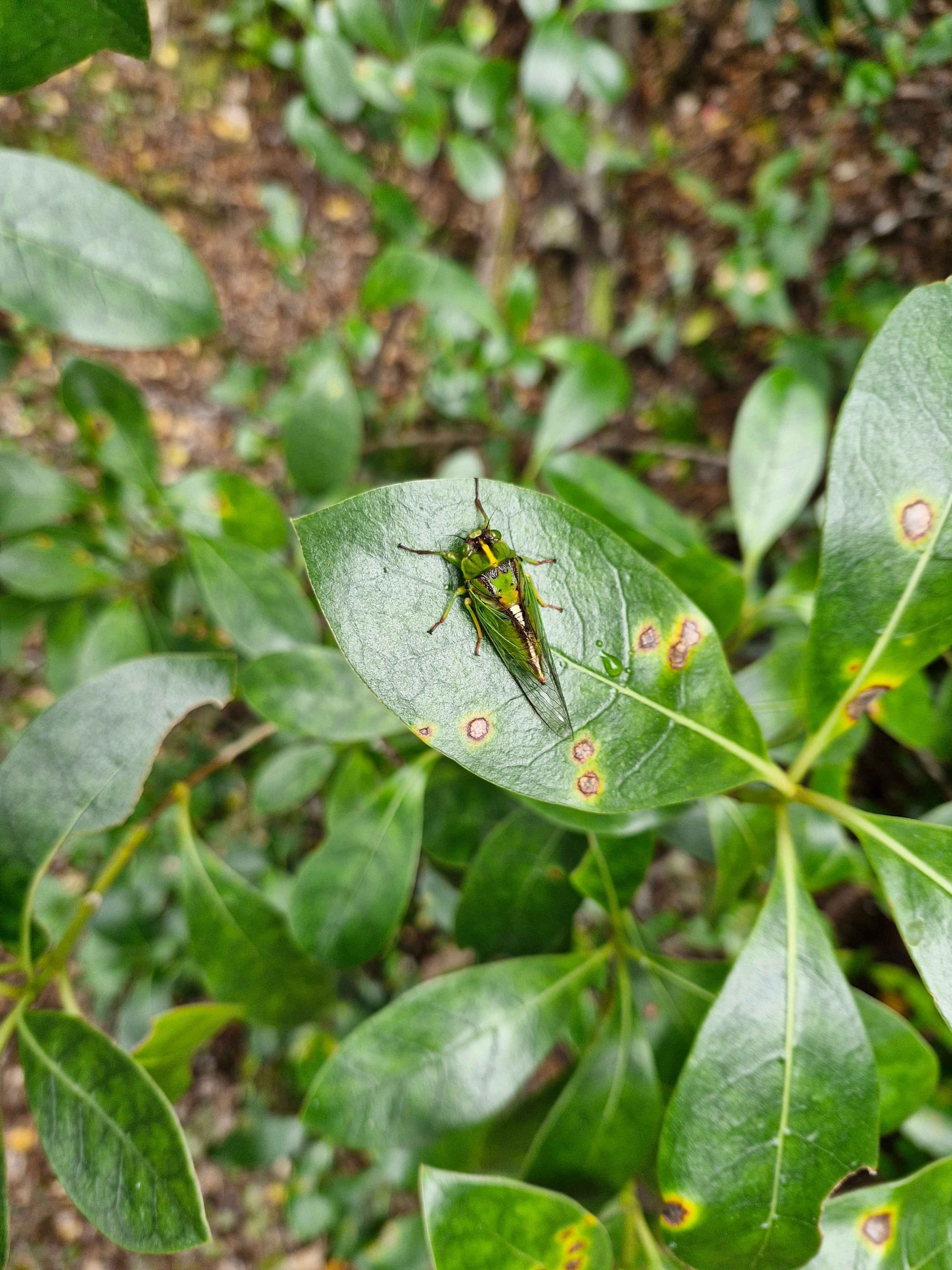
Above: The green cicada Kikihia subalpina is a good food source for birds when its adult stage appears in autumn - pictured here hiding on large leaved evergreen natives in a patch of bush on the shore of lake Wakatipu
Tidy gardens are anathema to arthropods. Bare soils, tightly clipped lawns and bushes are devoid of winter insect domiciles. Bug hotels are frankly inadequate contributions - unless designed with a specific species of arthropod in mind, they do less than an old rotten stump, which is much cheaper. Rotting wood is an important part of ecosystems and easy to include as garden features, by stacking logs or dotting about sawn off tree trunks.
Wood doesn’t need to be rotting to provide refuges. There are many native shrubs and trees with rough and textured bark that is not only visually attractive but prime real estate for insects. Kunzea (kanuka), Podocarpus laetus (Hall’s totara), Fuchsia excorticata (tree fuchsia) and Olearia hectorii have rough bark that can be peeled off revealing many crevices for dormant insects. Carpodetus serratus (putaputawētā) tree bark is tunneled by the puriri moth caterpillar, and these tunnels are later used as homes by the weta and funnel web spider. While we do not have puriri moths in Central it is a great illustration of the mutualistic relationship these organisms have.
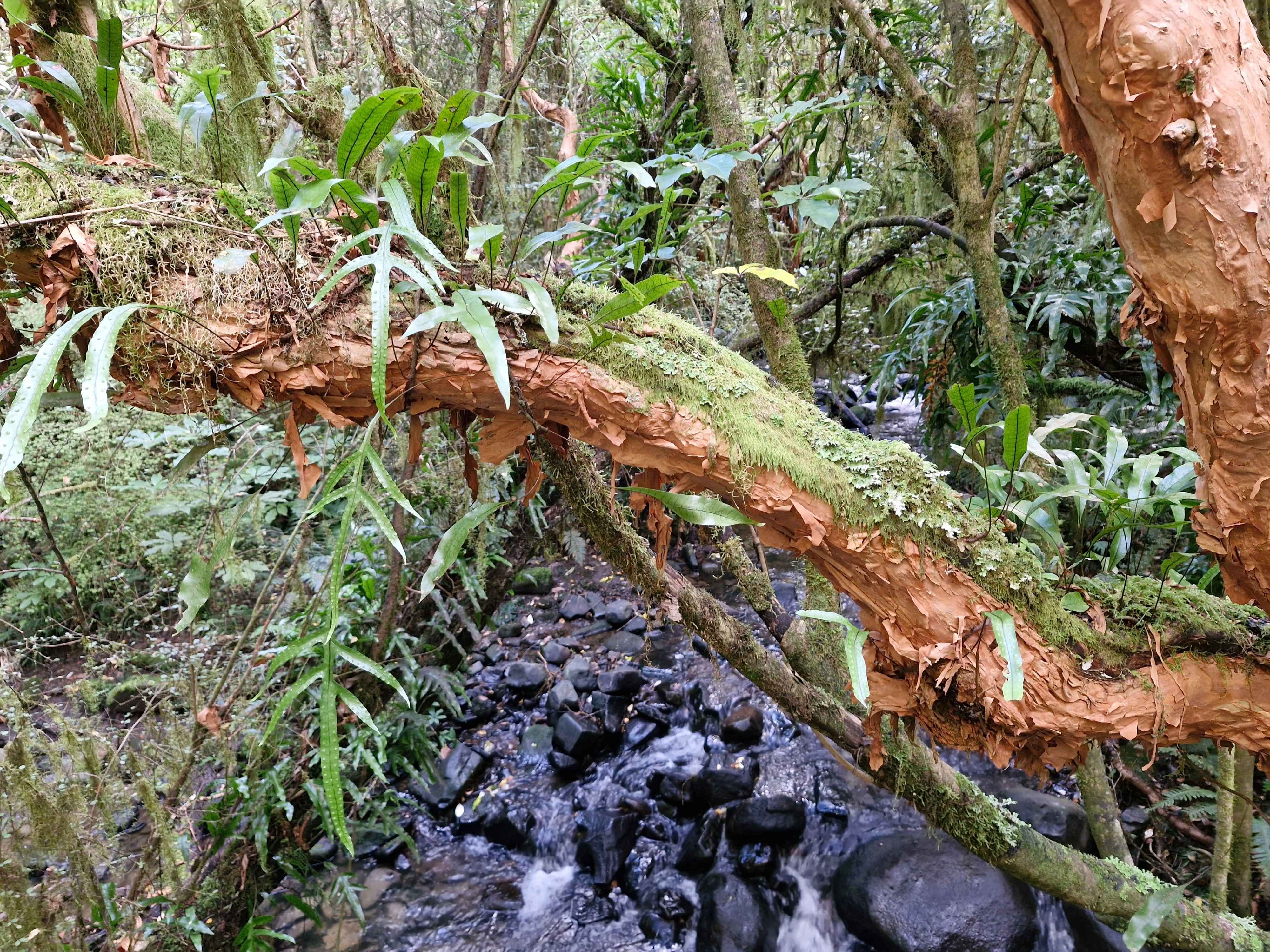
Fuchsia excorticata, with its flaking bark and gnarled habit, provides a great habitat for insects, especially when part of a complex 3-dimensional environment as above.
Many of these relationships between plants and animals have yet to be studied and documented, but they do exist in native ecosystems and plantings. While non-native trees and shrubs may also exhibit attractive flaky bark that can work as winter refuge they likely offer little else. The birch tree for example has a degree of flaky bark but offers no nectar or fruit and is wind pollinated. It is generally not used by native birds for nesting and being deciduous, its shelter to invertebrates is greatly reduced.
If you want to help birds through winter, plant a broad range of native plants, not just limited to the well known honey-feeder plants like flax and kowhai. Don’t be too tidy especially over winter, leave leaves and decomposing material like logs. Have water like a bird bath, pebble dish or a small pond/wine barrel with logs in for accessibility. Don’t use pesticides especially systemic insecticides (like those used for killing grass grub). Keep bird feeders religiously clean. Monitor bird sightings in winter using an app like eBird or Merlin, as the type of birds you see will give you an idea of what food is present. This will also help track bird numbers and diversity over time to see if any changes you made have made a difference.