Plant spacing
We’re often asked, “how far apart should we plant our plants?”. While it’s easy enough to give some quick guidelines, and this is usually enough to get the job done, a comprehensive answer will require consideration of a number of factors, some of which we explore below.
Plant size and health
If you are not hedging, plant spacing should mostly be determined by eventual plant size, in order to maximise plant health, growth speed and quality. Most of our plant descriptions will mention the eventual plant width. For a cohesive planting, space plants closer than the eventual width. The opposite is true for giving space around the plant to appreciate its form.
Close spacing reduces airflow and increases the prevalence of pests and diseases. It naturally increases competition for sunlight, and other potentially limited resources such as soil and moisture.
Plants that are planted too densely can shade out other plants that were maybe growing less vigorously or combine to make an unintentional thicket. In this case plants will need to be cut back. For less ongoing labour, the choice can be made to remove selected plants or let the less vigorous plants succumb, as they would in nature.
On the flip side, growing a group of plants together and near mature plants can be more successful than a single exposed plant. This is the nurse crop effect - using the neighbours as shelter and shade, reducing negative environmental effects until the plants are established. Mycorrhizae and other subsurface microbes can also play a role.
Plants grown with less water available or very free draining soil may struggle to ever reach their potential width. Drought tolerant plants used in a difficult site can be planted closer together as a result.
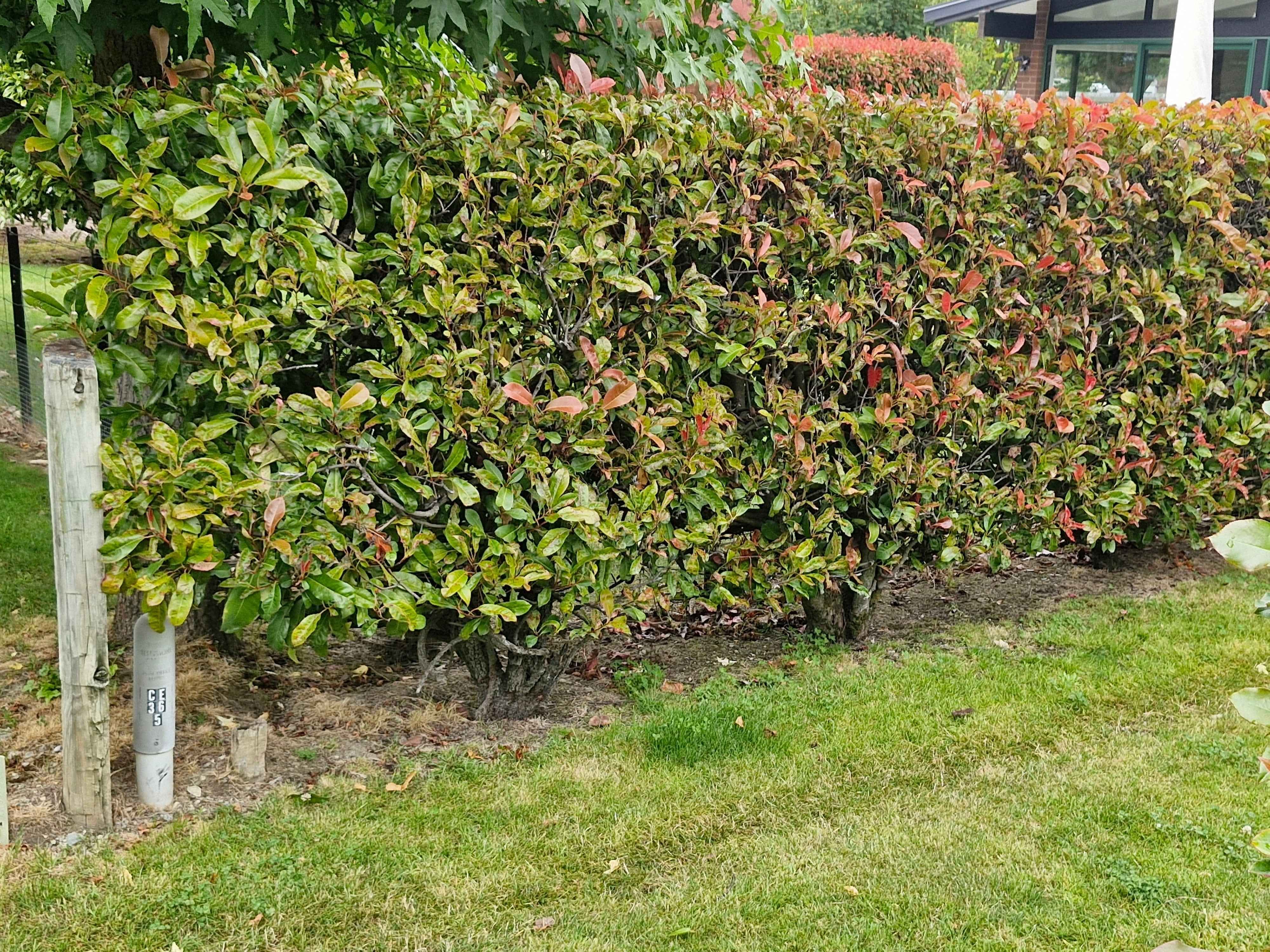
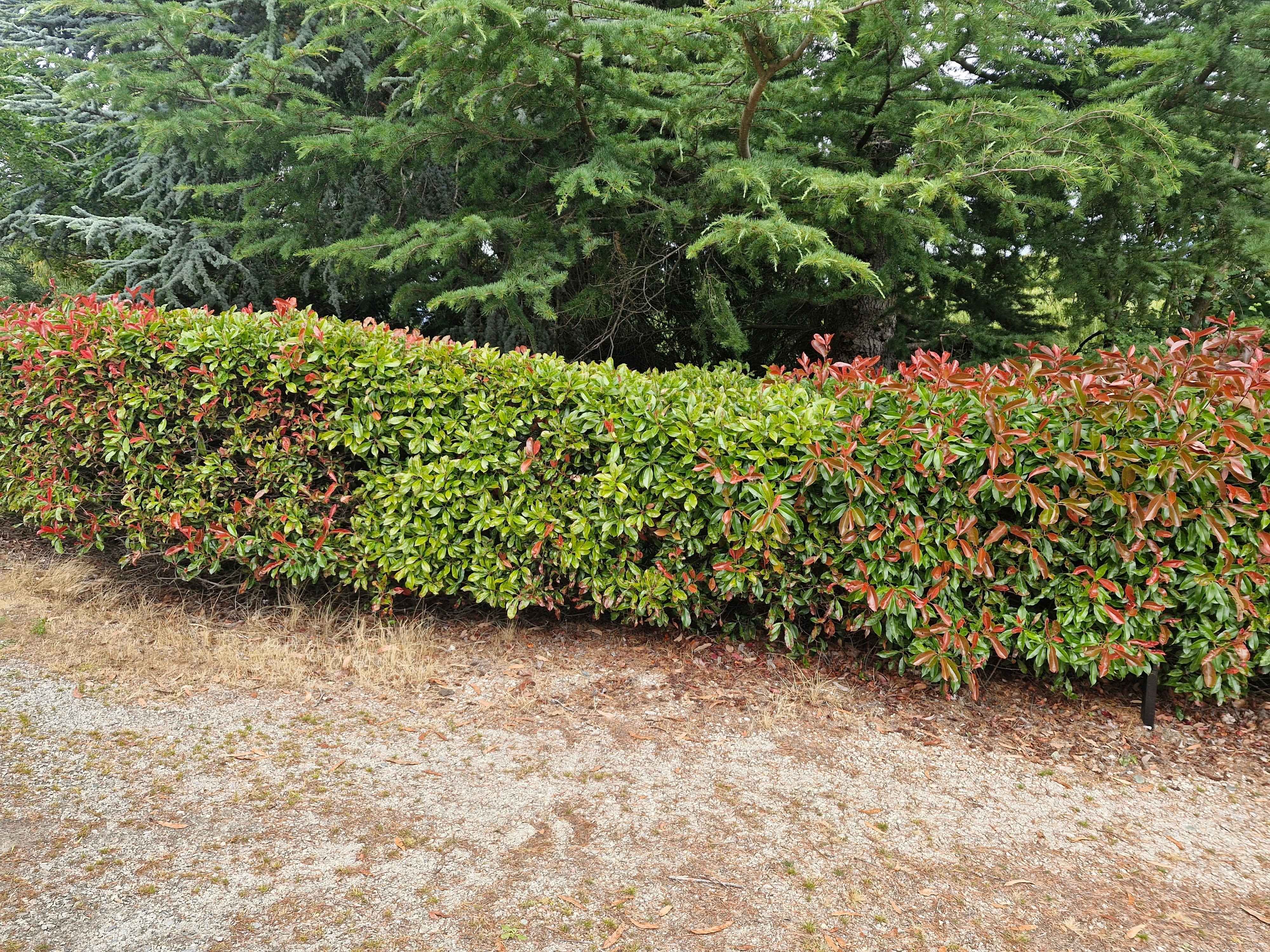
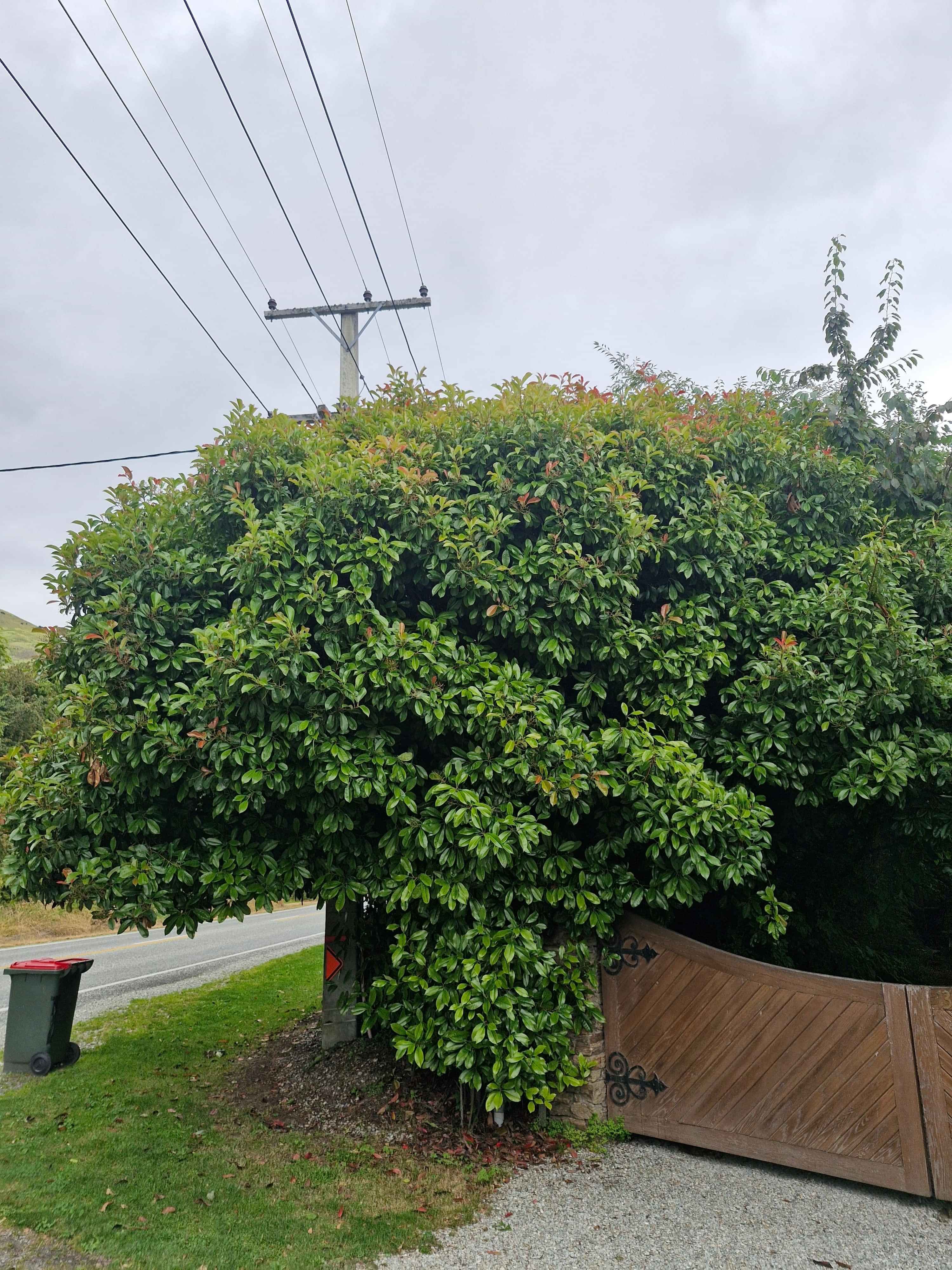
Above: Photinia ‘Red Robin’ planted at 1m spacing for a more suburban quick hedge, much more mature plants at 2-3m spacing giving a similar effect, and a mature specimen standing alone
Hedging and growth rates
When hedging, you are not letting plants grow to their natural size and shape, so plant spacing is mostly concerned with getting the plants close enough to knit together relatively quickly. For hedges that are around 2m high, plants are generally spaced between 0.45 and 1 m. For slower growing, smaller hedges like Buxus, plants should be planted closer together, between 20 and 45 cm. The larger the plant when you plant it, the quicker it will start touching its neighbour.
It is vital that plants are matched to their growing conditions or provided the conditions they need to survive. It is very common to see a dead plant in a line of hedging. Yellowing leaves and a lack of new growth on hedging plants is a sure sign that investigation is needed.
Each species has a different growth rate. Faster growing plants can be spaced further apart in a cohesive design as they will knit together quicker. They also may out compete their neighbours - for example Lonicera nitida can grow 30 - 60cm in one season whereas Buxus sempervirens may only grow 10 - 15cm. If you planted both at 1 m spacing it would take one season or less for the leaves of the Lonicera to start touching but 5 years for the Buxus to start touching. At a 40cm spacing the Buxus would be near touching within a year.
Many common hedging plants have medium water requirements and can be slow growing once planted if enough water is not available. It can take two to three years for plants to get established and start growing at a good rate. Due to the close proximity of plants in hedging it is advised that soil is improved, mulch added and irrigation is available to improve growth rates on poor soils and dry areas.
Often the biggest determinant for the initial size, spacing and quantity of plants is budget. The budget may determine less plants/more distant spacing and maybe a smaller grade of plants to begin with. The drawback to this will be that it will take longer for a hedge to knit together. To save money you can save the bigger plants and closer spacing for areas near the house where you want privacy screening quicker.
Naturalistic planting
In the wild, there is increased competition between individuals, interspecific competition, predation, etc and thus spacing is radically different than a planting. If you want to create a more naturalistic effect in your planting, vary your planting distances and think groups of the same types of plants together with a few dotted further apart. Spacing plants repeatedly at exactly the same distances will create an unnatural looking planting. The opposite would be a more ‘modern’ planting, which could use symmetry, topiary etc to deliberately create an ordered, unnatural effect which may combine well with manmade structures.
Cohesion
You can plant closer together to achieve a cohesive look. Planting grasses/tussocks close together will create one large grassy area with individual plants being hard to pick out. This is also useful for creating a mat with groundcovers. Plants can be spaced wider apart if you want to see the forms of the plants, such as a tussock field where individuals can still be seen. Some plants are statement pieces and you may want to see the complete outline of the plant. A tree spaced apart from others looks much more stately than one growing into a miniature woodland.